



Ever walked into a bar thinking you were just there for the game, and two hours later realized you hadn’t even checked the score? That’s not a fluke. That’s the new era of sports bars. They’ve changed. A lot. And people have started showing up for reasons that go well beyond the scoreboard.
In cities like Nashville, where food, culture, and social life intersect on nearly every corner, the bar scene has always demanded more. You can’t just toss a few flat screens on the wall and call it a day. Guests want a space where the game is part of the experience—not the only thing happening. They want better food, better seats, and better reasons to stick around even after the buzzer sounds.
In this blog, we will share how the modern sports bar has evolved into something more layered, more intentional, and more essential to how we gather and celebrate in today’s culture.
Why the Menu Makes or Breaks the Experience
Let’s talk about food. It used to be background noise in the sports bar world. You ordered wings, maybe fries, and kept your expectations low. Not anymore.
Now, the menu is often what brings people in. It’s a key part of the experience. Elevated takes on game-day favorites, creative cocktails, local beers, and fresh ingredients all matter more than ever. A great sports bar doesn’t just serve meals—it builds them around the event. People want to feel like they’re part of something curated, not just convenient.
And when you combine food and sports in Nashville? Then it makes perfect sense why B’Hops Sports Zone is already on the radar. Opening soon in the city’s Wedgewood Entertainment District, B’Hops will feature a chef-driven menu of elevated bar favorites, a wide selection of local craft beverages, wall-to-wall TVs, and a design-forward layout that blends comfort with energy. With flexible seating, an expansive bar, and a space designed to be as social as it is sporty, it’s shaping up to be the ultimate game-day destination.
The Game Is Only Part of the Story
Yes, people still love sports. That part hasn’t changed. But what they expect from the places they watch them in? That’s been completely rewritten.
Today’s sports bars are built to multitask. They’re not just for die-hard fans. They’re for food lovers, remote workers, casual groups, and people who just want to be where something’s happening. That means design matters. Comfort matters. Atmosphere matters.
Bars are no longer dark, loud boxes packed with folding chairs and fried food. The modern version looks more like a high-end lounge crossed with an upscale restaurant, but with the same electric energy during kickoff or tip-off.
This shift isn’t just about being trendy. It reflects how people now value their time out. If they’re going to leave the house, they want more than just a place to watch. They want a place that feels good to be in. That changes how sports bars operate—and who they’re built for.
Design for Fans, Friends, and Everything in Between
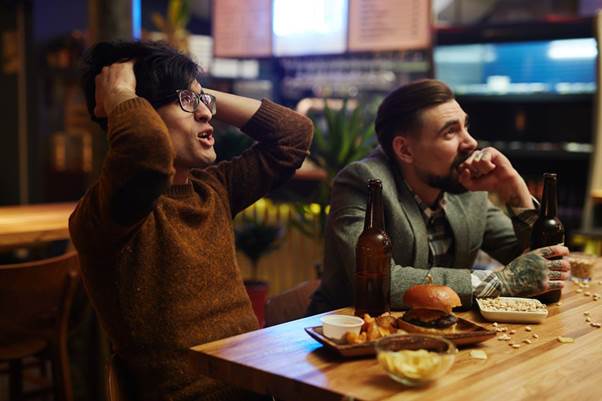
A modern sports bar has to be ready for all kinds of guests. Hardcore fans in jerseys. Birthday groups ordering sliders by the dozen. Couples splitting cocktails over a midweek matchup. The layout has to flex without losing its flow.
That’s why design has become such a priority. No one wants to feel jammed between tables or stuck with a terrible view of the screen. People want options. Lounges. High tops. Big booths. Spaces that let you hang out, not just sit down.
Sound matters too. Guests don’t want to yell over the volume—or worse, not hear the game at all. Good acoustics, smart lighting, and screen placement that makes sense turn a basic space into a great one.
This attention to detail pays off. People stay longer. They return more often. And the energy of the room reflects that effort.
Programming That Goes Beyond the Season
In the past, sports bars lived and died by the schedule. Big games packed the room. Off days meant empty tables. That model doesn’t cut it anymore.
Now, sports bars need to feel alive every day of the week. That means building out events, themed nights, trivia, and special programming that keeps people engaged year-round. A smart sports bar isn’t just thinking about game night. It’s thinking about Monday lunch, Thursday happy hour, and everything in between.
This kind of consistent activity creates rhythm and loyalty. People start seeing the bar as part of their routine—not just their team’s schedule. And that kind of connection builds a real community, not just a customer base.
A Culture Shift You Can Taste and Feel
What we’re really seeing is a cultural shift. People want to gather more intentionally. They’re tired of loud spaces that don’t value their time or comfort. They want the buzz of the game with the polish of a night out. The modern sports bar answers that need.
It gives people the permission to relax and celebrate in the same space. It doesn’t make you choose between quality and fun. It blends the two. That’s why the food is better. The lighting is warmer. The design feels fresh. It’s not an upgrade. It’s a redefinition.
Sports bars now compete with restaurants, lounges, and event spaces. And the ones that embrace that competition are the ones that win.
More Than Just a Place to Watch
The biggest change? People don’t go to sports bars just to see the game anymore. They go to feel it.
They want the cheer of a crowd when something big happens. They want to share a plate of something great while the game plays in the background. They want to be part of something—even if they don’t know all the rules.
That’s the role the modern sports bar plays now. It’s not a one-dimensional venue. It’s a space built for energy, food, celebration, and connection.
And as more of these spaces open across the country, the good ones will be easy to spot. They’ll be the places where the game is just the start of a much better night.