




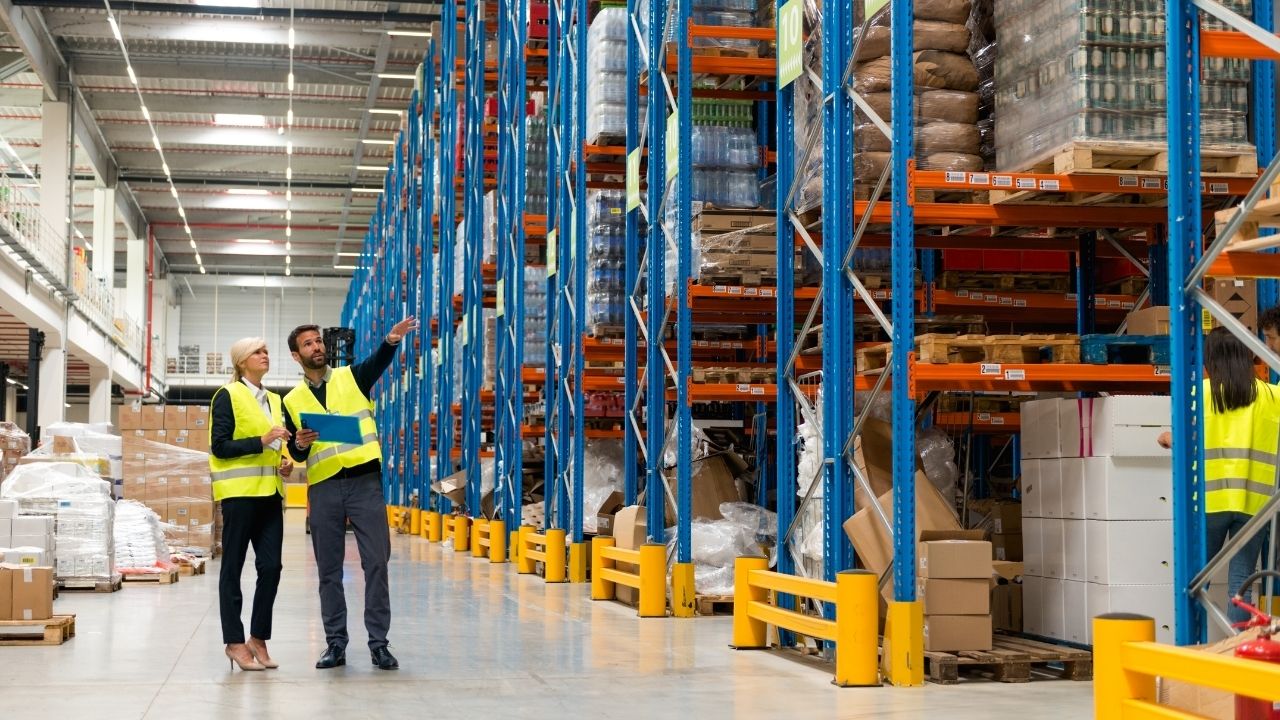
Most warehouse managers think of signage when OSHA comes knocking, or someone almost gets run over by a fork truck. The truth, however, is that thinking about signs as just a compliance issue is a significant shortcoming; it fails to dig into the real magic signage and what it does for a warehouse.
Warehouse signage isn’t about compliance; it’s about making it possible to use the facility. When people can find the things they need, avoid the hazards, and move through the facilities, everything else becomes a whole lot easier.
Why Signs Matter in Warehouses
Go into just about any distribution warehouse and you’ll find signs everywhere. Exit signs, aisle markers, areas designated for fork trucks, where emergency equipment is, you name it. Most managers have a pretty good sense of how to do this because they have to. What’s problematic is when managers only look at signage in this light.
Signs are visual communication that is always on. It doesn’t take a break, or calls in sick, or gets held up chatting with one person and not another. This is important in an environment where people continually move around and operate heavy equipment.
What about when the new shift comes in? A new population of people comes in, and the old one is leaving; the last thing they want to do is pay attention to anything. Without visual aids throughout the facility managers are counting on the memory and attention of every individual to avoid accidents, and it’s usually in this situation that mistakes get made.
Where Efficiency Comes From (Not Where You Think)
This might not be a topic that gets raised often in discussions of warehouse managers, but good signage relates directly to pick rates and pick accuracy. Easy to find items means faster pickers. Easier to read rack labels mean fewer mistakes.
A picker who has to check ten times that they are in the right aisle before making their picks doesn’t take very long. Ten seconds doesn’t feel like much until it’s multiplied by several hundred picks a day from potentially dozens of different employees. Those ten seconds turn into money—money that could quickly be dwindling as a picker attempts to read an illegible label or make their way back and forth trying to remember if they are in B-14 or B-41.
This applies to equipment operators as well. Forklift drivers who can identify their routes, traffic patterns, and areas to avoid all without second guessing themselves feel confident by the time they back behind the wheel of the equipment. More confident operators complete their task in front of them quicker and perhaps even make their colleagues feel more comfortable around them.
Warehouses with strong industrial warehouse signs see differences that managers can notice within weeks of installation. Employees adapt quickly to improved signage because it makes life easier for them.
Training Savings
Turnover rates for labor in warehouse environments reach as high as 40-50% yearly in some regions of the world. Managers train people all the time who only might last a couple of weeks. Time is money; the more quickly someone can become certified and utilizable, the less money managers lose.
New employees learn the layout of facilities quicker when their systems make sense. Color coded sections, defined walkways, aisle and rack designations that follow a specific pattern make it easier for new employees to adapt. When managers rely on memory to get around, they look for hazards and what to do or what not to do. People are not ‘memorizing useful information,’ they are merely following a system without even realizing it.
This has implications for seasonal workers hired for only a few weeks. If someone has to spend a few days just learning their way around; the facility loses out on a considerable chunk of time they can be useful.
Supervisors will have vastly more time available to oversee operations, instead of acting as a human GPS for each new hire trying to figure out where things are and what different areas of the facility are used for.
Warehouse Safety
Most managers and supervisors know that signage indicates hazardous areas and places where emergency equipment can be found. Good signage avoids accidents in ways that aren’t as readily identifiable to supervisors.
Fork truck and pedestrian traffic issues are common across warehouses, but whether people actually stick to designated areas depends on the convenience of those paths. When walkways are visible and people understand why those systems are in place, people will use them.
The same goes for personal protective equipment policies. An area may only say hard hat required, but an area that people know why it’s labeled that way (as opposed to just needing a hard hat) is more effective.
When disasters happen, good signage ensures everyone knows what actions they need to take to ensure their survival and if signage is clear and identifiable, people have a significantly better chance of surviving. Knowing where the exits are before someone screams ‘fire!’ can save people’s lives if another incident occurs in the facility.
Making Sense of Space
Warehouses can become disorienting. Some warehouses exceed 200k square feet of building space, and others have aisles that look identical running every way besides. Even individuals who work there every day might get lost occasionally. It’s not an issue of knowing the facility; it’s a concern regarding natural human behavior.
When people work in a building they tend to create mental maps of the space. The easier this is for them to do, the less energy it takes to focus on other tasks instead of trying to figure out how to get from task to task.
They know that the A-section is always next to receiving, and the hazmat storage section cools down in x amount of time because of visual markers.
All of this means people will have energy left to focus on the tasks they need to execute rather than figuring out where they are.
Posters or pictures hanging up aren’t visible the same way row and section signs need to be; signage often breaks down too quickly for managers who take efficiency seriously.
A faded sign isn’t a sign. Even under reasonable circumstances, and even when taken care of, signs break down. Ink fades, materials deteriorate, glue doesn’t last. In warehouses with extreme heat or humidity, and where action is really taking place, this happens even more so than in a commercial building with standard conditions.
A rack label sign that you can’t read might as well not be there. This is even more true with partially readable signs; they create havoc by misleading individuals into making mistakes that cause them to end up back into your whole problem.
Regular audits can help avoid these issues. By walking through the facility (and not just peeking around here and there) you can check if there are any signs that need to be replaced every once in a while, once a month perhaps? This will help avoid your system failing slowly over time.
What Works
Signs should be made from suitable materials (no paper signs in freezer areas or reflective signs where there isn’t any light). Formatting should be uniform throughout your facility with bin numbers that make sense and are readily identifiable.
Faded or poorly manufactured signs don’t help intuition. Signs should be placed consistently, and people should know where to look for the signs regarding the content inside of those very signs.
In other words:
- The height of the sign should consider the length at which people will see it
- Size (approximated viewing distance) signage should consider the distances people will see signs from, say from 50 feet as opposed to 5 feet
- The height of signs should be suitable so supervisors aren’t always looking above for information (a consistent height throughout the facility needs consideration)
- Colors should be coded correctly, not randomly; color coding indicates more when it is read consistently as opposed to being randomly assigned
- Cautionary colors need to be added in a logical order, not a haphazard, sloppy manner; managers need to show construction is purposed with intent
You don’t need to spend as much as one supervisor did on visual indicators while researching multiple facilities all over the world; managers can make better use of signage while being thoughtful toward the information people need engraved upon those signs.
Conclusion
Signage creates infrastructure and something managers should consider before even opening their operations for business. When managers use facilities correctly, it pays for itself by ensuring better traffic flow.
Signage matters, don’t think of it as merely another thing you need in order for people from OSHA not to come knocking at your door. Signage is what you need to ensure operations go smoothly and no one box isn’t ticked every day.