




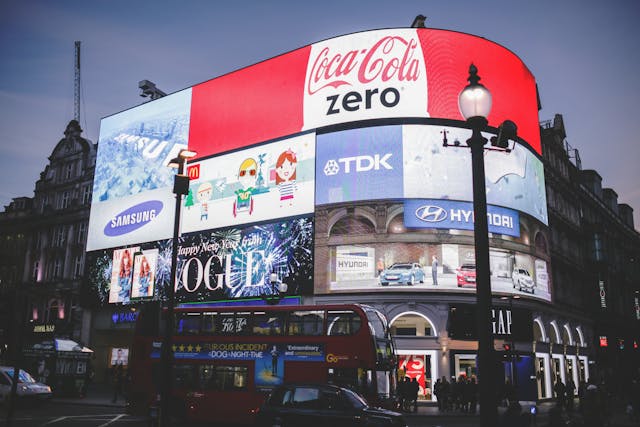
Urban environments move at a relentless pace. Commuters move through crowded streets, attention shifts quickly, and most messages compete within seconds. Advertising at street level works because it shares the same physical space as daily activity. Instead of interrupting behaviour, it becomes part of it. This proximity, combined with repeated exposure and environmental relevance, gives street-level formats lasting influence in dense metropolitan areas.
Alignment With Natural Movement Patterns
Street-level placements appear along habitual routes—towards stations, cafés, intersections, and retail strips. Positioned within established pedestrian flow, they benefit from passive exposure and dwell time, two fundamentals of out-of-home media measurement. Visibility is continuous because audiences encounter the same locations every day.
Formats such as posters and murals gain impact through accurate site selection, clear sightlines, and repeated exposure in high-footfall corridors. Within this framework, https://www.revolution360.com.au/ integrates campaigns into the pathways that define daily urban movement rather than competing inside crowded digital channels.
Real-Time Contextual Relevance
Fast-paced cities are built around distinct micro-environments—transport hubs, dining precincts, retail clusters, and entertainment zones. Street-level media uses location intelligence to match messages with the mindset of people in those spaces.
This reflects the shift towards contextual targeting, where relevance is shaped by environment instead of personal data. Creative placed near a university, gym, or nightlife strip connects with a specific moment and purpose. Because the message aligns with immediate surroundings, recall increases even when viewing time is brief.
Physical placement also creates environmental congruence. Architecture, movement, and local culture reinforce the campaign, forming a single visual experience that screen-based formats cannot replicate.
Operating At The Speed Of The City
Urban campaigns require speed, flexibility, and scale. Street-level formats support rapid campaign rollout, allowing advertisers to respond to seasonal demand, events, or shifting consumer behaviour.
The modular structure of poster networks and the defined production workflow of large-format murals make creative updates efficient. Campaigns can be refreshed without rebuilding the entire media plan, which suits shorter planning cycles and tactical activity. At the same time, high-frequency visibility builds familiarity. Even brief daily encounters along commuting routes strengthen recognition and brand memory.
Cutting Through Digital Saturation
City audiences face constant digital messaging. Street-level advertising creates media contrast—a physical format that cannot be skipped, blocked, or scrolled past.
This strengthens cognitive imprinting, where repeated exposure in the same location improves memory retention. Unlike mobile formats viewed in multitasking environments, street-level media occupies a single visual field. Attention may be short, but it is focused.
Scale, material texture, and permanence also add sensory weight. In screen-heavy environments, this physical presence resets attention and increases recall.
Contribution To Urban Identity
Street-level campaigns often become part of a neighbourhood’s visual character. Large-scale artworks and coordinated poster runs support placemaking, reinforcing local identity while delivering commercial messaging.
When creativity reflects the culture and aesthetics of its location, it is seen as a contribution rather than an intrusion. This increases acceptance and engagement, particularly in areas where authenticity matters. The format, therefore, operates as both media and environment. Its presence remains in public memory even after installations change.
Measurable And Scalable Urban Reach
Modern street-level advertising is supported by audience mobility data, geospatial analytics, and impression modelling. These tools convert movement patterns into measurable reach and frequency, aligning the format with wider omnichannel strategies.
Advertisers can scale campaigns across multiple suburbs while maintaining local relevance. Performance can be assessed through store visitation, search uplift, and behavioural change within defined catchments. This combination of physical visibility and data-backed planning delivers both precision and scale in high-density cities.
Street-Level Media As The Native Language Of Urban Attention
Street-level advertising resonates because it operates within the systems that shape urban life—movement, repetition, context, and place. It builds familiarity through routine exposure and aligns with real environments rather than competing for fragmented screen time. In fast-paced cities, this integration allows campaigns to remain visible, relevant, and memorable at the speed people move.