




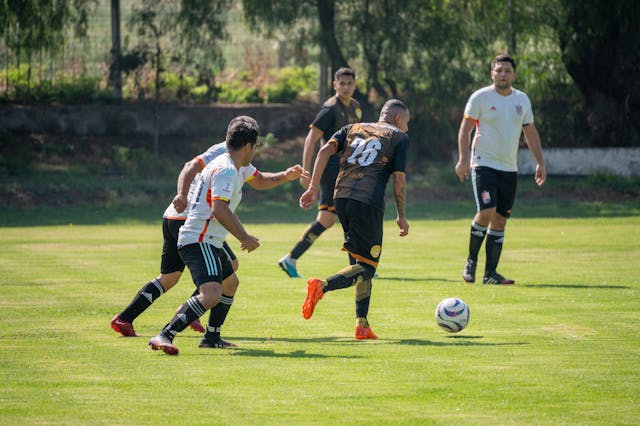
Today, sports are a serious business. Spend some time on the grounds of any major football club and you’ll likely come across data scientists, marketing managers, finance directors and operations coordinators: people who never kicked a ball professionally but are just as paramount to the success of these enterprises.
Within the last decade, everything has changed. Where there was once a traditional club operated by an ex-player and some local businessmen, now multi-million-pound organizations exist that require the same level of business acumen found with any other major enterprise. Thus, real opportunities exist for those who love sport but also have an understanding of how modern business organizations operate.
And it’s not just at the top levels. Even small clubs need people who will manage their social media presence, maintain their budgets, negotiate with sponsors, and market events. The expansion of sports as a business field is staggering and shows no sign of slowing down.
Why Generalized Business Degree Programs Don’t Apply
Football clubs are not run like ordinary businesses. While the basics remain the same—marketing, finance, operations management—they are all applied in a unique lens that applies to sports. The regulations differ, revenue channels differ, and customer (fan) engagement is different.
Many business school programs teach about companies producing widgets or providing services. They fail to recognize Financial Fair Play regulations, the concept of transfer windows or how matchday income comprises 40% (or more) of club finances.
They fail to connect emotionally. The impact of loyalty on marketing decision making and what people choose to purchase versus how a team’s failure in the season could impact its commercial partnerships.
Specialized fields in sport offer programs like the Professional Master in Football Business course, which provide scholars with an understanding of how principles apply in a football context. Economics of the transfer market, purchasing rights for broadcasting and stadium operations are all learned by people who would otherwise be looking at MBA programs focused on generalized audiences.
The curriculum involved not only includes contract law in football, partnerships and collaboration and digital marketing for sports leagues and brands, but many link business principles to real occurrences that take place on and off the pitch daily.
Real World Experience
A good sports business program doesn’t just teach but gets students involved with projects actually commissioned by well-known clubs and sports organizations. Students might work with a non-league team on matchday experience improvements, analyze ticket sales for a League Two club or look for sponsorship avenues for a women’s league team.
Such projects mean something when it’s time to interview because connecting intangible coursework learning to practical application shows potential employers that students know what they’re talking about.
It also connects students to how sports organizations actually work from the inside-out, where some might think they like one area, only to find through project involvement that they don’t feel as passionately about it as they thought. Better to learn about disinterest in commercial partnerships during studies than after getting hired for first jobs.
Networking opportunities are legitimate as well. Students will work with other professionals eager to get into the sports business and some relationships will prove invaluable later down the line.
Where Opportunities Exist
Sports marketing is one of the first areas of most importance—and rightfully so. Every club needs someone to help partner with brands and every league and major tournament requires someone whose sole responsibility is to engage fans. This role exists from grassroots levels up to international tournaments.
But that’s just one area of many. Modern organizations need financial operatives who understand revenue sharing against cost controls; they need operational specialists who can assist with all matchday competencies and training ground maintenance; they need legal teams who understand contract negotiations.
Player representation has become incredibly sophisticated; sports agents need employable support with salary caps, budgets and pro forma contracts prepared. It’s no longer about great relationships but about having business intelligence necessary to navigate complexities.
Digitalization has introduced whole new job titles. Teams need people who understand data monitoring, social media strategies, e-commerce connections and fan engagement platforms. Many job opportunities literally didn’t exist fifteen years ago—they’re integral parts of every professional sports organization today.
Skills Applicable in Many Industries
The best part about working in sports is how many skills are transferable to other industries. Project management experience gained through sporting events connects naturally to event planning for corporate ventures; fan engagement is easily applicable to any consumer driven enterprise.
Learning how to work under pressure with multiple stakeholders (a learned experience across all business endeavors in sporting contexts) applies positively across all industries.
Sports teaches employees how to think fast on their feet when things don’t go well and adapt strategies when new resources or opportunities become available. These professional necessities translate well into all industry settings.
Make It Happen
Professionalized sports education programs provide the easiest access into an industry whose entry levels seem nearly impossible otherwise. The specialized training mixed with real-world project experience sets up graduates for success where others may fall by the wayside.
Look for comprehensive preparation instead of purely theoretical offering. Seek courses that teach through practical means with true professionals working in relevant fields who can offer up not only connections but job opportunities before graduation.
The industry is waiting for skilled, professionals who understand business fundamentals blended with authentic appreciation of game life. The sooner this access happens through professional education, the sooner aspiring students can secure their dreams.