


When we talk about immersive theater, the first thing that comes to mind is usually projection mapping, motion-tracked lighting rigs, or elaborate scenic automation. Those can be flashy and attention-grabbing. But the shows that actually manage to pull their audiences out of their chairs and into the world of the play don’t do so because of those technologies. They do so in spite of them, by using the physical environment – the weight of the materials, the texture of the surfaces, the careful control of where light falls and where it doesn’t.
The Tactile Visual – Making Audiences Feel What They Can’t Touch
An audience can’t run their hand across a stage curtain, but they can see its weight. Heavy-weight cotton velour drapes differently than a cheap polyester blend. It falls in slower, more deliberate folds. Under stage lighting, it absorbs rather than reflects, creating a depth that cheap synthetics simply flatten out.
This is the tactile visual. The material communicates information to the brain through sight alone – luxury, gravity, age, power – without a single actor having said a word. When a production uses high-quality heavy velvets or wools in its set dressing and drapery, audiences respond emotionally before they consciously register why. When it uses cheap stand-ins, something feels slightly off. They might not identify what. The immersion breaks anyway.
This is why textural layering matters. Using fabrics of different weights and weave densities at different depths on stage creates a sense of physical dimension that flat paint or printed backdrops can’t replicate. The front layer behaves differently than the mid-ground, and differently again from the cyclorama behind it. The eye reads that variation as architectural realism.
Light Is Only As Good As The Surfaces It Hits
Soft goods and lighting design should not be seen as separate art forms. The material used for soft goods, specifically fabric, plays a crucial role in how light interacts with the stage. For instance, when using light-absorbing, dense fabrics like true-black velvets, “voids” are created on the stage, which are areas where the eye naturally comes to rest. This makes the illuminated areas appear brighter and more in focus, creating a powerful contrast. Fabrics with a looser weave or subtle sheen function as a wash of color that changes with the lighting state, effectively enhancing the mood of the design.
The use of fabrics devoid of lighting consideration is one of the most common mistakes in production design and can easily be avoided. Soft goods, specifically fabric samples, should be selected alongside an actual lighting plot. This ensures that fabrics react to the actual production lighting in the way the designers intend. For instance, a correctly treated and lit cyclorama can create the illusion of a sky, dawn, or even vignette. A poorly selected cyclorama, on the other hand, can make every cue that uses it lose credibility.
Masking – The Frame That Holds The World Together
Masking is the most common culprit in lost audiences’ suspension of disbelief. The Black legs and borders of a stage’s performance space exist solely to hide practical showrunning details – the edges, the rigging, the wings, and everything else that is not part of the definition of the set itself. If poorly located, and underperforming, or utilising the wrong fabric, all of these unremarked realities will seep into the peripheral vision of the patrons.
According to theatre design industry best practice, the benchmark for professional stage masking is heavy-weight cotton velour in the 20oz to 25oz category, as one square yard can block up to 95% of light and significantly enhance the Noise Reduction Coefficient of the room. Masking is not a purely visual effect – it plays an acoustic treatment role in damping the room’s reflections that would otherwise leave us with an echo-chamber hollow audio mess. This is where professional drapery solutions for theatres act as the structural frames determining the edge of the world of the production. The traditional masking system does not merely hide the rigging. It also tells us where the dramaturgy starts and where the scenic projection stops. Get that wrong and no amount of lighting design or scenic detailing will compensate.
Fire retardancy should be non-negotiable in this category. All textiles used in a professional production environment should meet the relevant IFR or FR standards, and any company not providing documentation for those ratings shouldn’t be considered for a professional venue.
Sightlines And The Edge Of The World
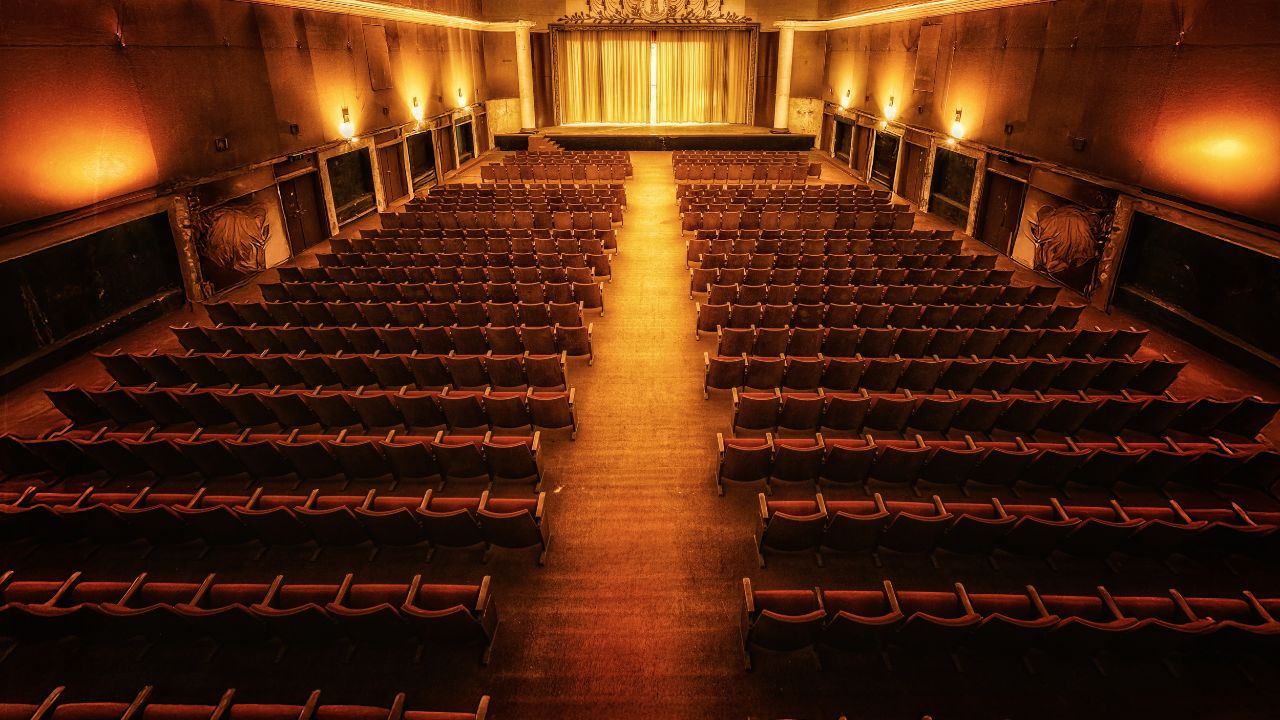
Creating an immersive experience for the audience is similar to solving a geometry problem. If a viewer can easily notice something that distracts them, such as an inconspicuous crew member, equipment hanging too low, or an area where the set doesn’t completely block their view, then the illusion is shattered.
To give uninterrupted views to the entire audience, especially those seated in the furthest corners or in the balcony, all such sightline issues should be resolved before the show starts rehearsals. Any modifications to the masking should be finalized during the design phase, not when you start technical rehearsals.
In an ideal situation, covering any holes in the set or the plot won’t require any effort or resources. It’s simply about minding the sightlines before the seats go on sale.