



You know that feeling when you step into a bathroom and something just feels wrong? The colors clash. The patterns fight each other. Everything seems disconnected and awkward. That’s what happens when floors and walls don’t talk to each other properly, and trust me, even the priciest renovation can fall flat on its face because of it.
Here’s the thing: nailing bathroom tile design isn’t about randomly grabbing pretty tiles off the shelf. It’s about creating intentional relationships between surfaces. Whether you’re gutting your entire master bath or just freshening up a half-bath, learning how to coordinate tiles properly will elevate your space from “meh” to magazine-worthy.
Understanding Tile Selection Fundamentals
You can’t build a solid strategy without knowing the ground rules. Let’s break down what actually matters.
Material Compatibility for Bathrooms
There’s a reason porcelain and ceramic tiles absolutely dominate bathroom projects, they laugh in the face of moisture while giving you endless design options. According to NKBA’s 2024 design findings, we’re seeing a major swing toward soft beiges, light woods, and texture-forward surfaces in primary baths.
Homeowners want warmth now, not sterile white boxes. Here’s what you need to remember: floor tiles demand higher PEI ratings because they take a beating. When you’re selecting wall tiles for bathroom applications, though, you can focus purely on looks since nobody’s walking on them.
Size and Scale Strategy
Large-format tiles measuring 12×24 are your best friend in generous bathrooms. Fewer grout lines mean cleaner sightlines. Medium formats around 8×10 hit the sweet spot for typical bathroom dimensions without feeling cramped. And those tiny mosaics? They’re fantastic for accents, but please, use them sparingly. Nobody wants to spend their weekends scrubbing grout in a million little tiles.
Finish Selection Matters
Matte floors give you traction where you need it most. Polished walls bounce light around and open up tight spaces. Mixing finishes creates dimension, but here’s my rule: stick to two types maximum. More than that, and you’ve crossed into visual chaos territory.
Planning Your Tile Combination Strategy
Jumping in without a plan is how you end up with buyer’s remorse and a renovation budget blown to smithereens.
Assessing Space and Light
Natural light changes everything. Seriously. A tile that looks amazing in the showroom might look completely different in your north-facing bathroom. Rooms facing north benefit massively from reflective finishes that capture and spread whatever light they can get.
South-facing bathrooms can handle matte surfaces without feeling like caves. Grab your tape measure and get accurate numbers, small bathrooms and expansive suites play by different rules entirely.
Establishing Design Direction
Modern bathroom tile combinations typically favor clean geometry and restrained variation. Traditional aesthetics embrace richer patterns and layered textures. Look around your home. What’s the vibe? Fighting against your existing architecture is an uphill battle you’ll probably lose.
Color and Tone Coordination
The 60-30-10 principle is basically foolproof: sixty percent of your space in a dominant tile color, thirty percent in a secondary tone, ten percent as an accent punch. Follow this formula and your cohesive bathroom ideas practically design themselves.
Pay attention to undertones, though, they’re sneaky. Warm beiges and warm grays are friends. Warm and cool tones together? Not so much.
Modern Bathroom Tile Trends Worth Considering
Current modern bathroom tile trends prioritize longevity and environmental responsibility over flash-in-the-pan fads.
Trending Palettes and Patterns
Earthy terracotta, moody sage greens, and delicate blush tones are absolutely everywhere in 2025 design inspiration. Geometric patterns remain strong, particularly when you balance them against neutral backgrounds.
Three-dimensional textured tiles bring a tactile element that photographs beautifully without overwhelming your eyeballs. Book-matched marble effects? They deliver that luxury vibe at porcelain-friendly price points.
Sustainable Choices
Tiles made from recycled materials aren’t just feel-good purchases anymore, they’re legitimately gorgeous and increasingly competitive on price. Low-VOC products protect your family’s health during installation and long after the contractor leaves.
Proven Combinations That Deliver Results
Some formulas simply work across different aesthetics and price ranges. Here are the heavy hitters.
Classic Contrast: Dark Floors, Light Walls
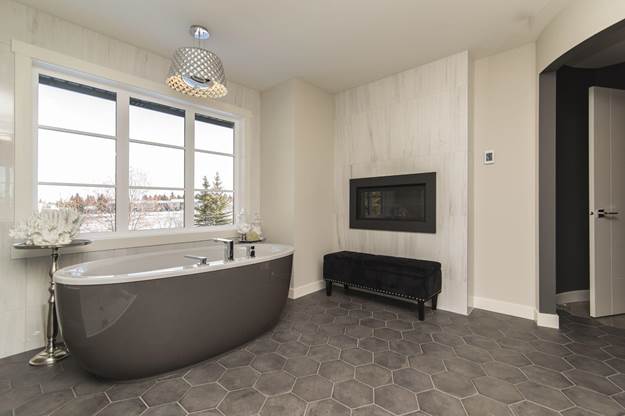
Picture charcoal hexagon floors against crisp white subway walls. Timeless, right? This high-contrast strategy visually expands smaller bathrooms while conveniently camouflaging dirt at floor level. Your grout color choice amplifies the entire effect, dark grout on white walls emphasizes geometric lines beautifully.
Monochromatic Flow
All-white schemes don’t have to feel cold and clinical. Mix matte floors with glossy walls for textural variation. Gray-scale progressions that move from darker floors to lighter walls draw the eye upward, creating the illusion of extra height. This technique absolutely shines in compact spaces where competing colors would create sensory overload.
Statement Floors with Simple Walls
Bold patterned floors need quiet wall companions. Period. Try encaustic-style pattern tiles on the floor paired with solid ceramic walls above, perfect balance. Let your floor command attention while walls provide support, not competition.
Room-Specific Application Strategies
Different bathroom types demand customized approaches for optimal results.
Master Bathroom Suites
Generous square footage allows you to zone through tile variation, maybe wood-look tiles near the vanity transitioning into stone effects in the shower zone. Just maintain color harmony across those zones to preserve overall cohesion. Double vanities look particularly polished when tile flows continuously underneath both.
Small Bathrooms and Powder Rooms
Light-reflective combinations are your secret weapon for expanding perceived square footage dramatically. Vertical tile patterns psychologically add height. Strategic accent placement, perhaps just the shower niche, injects personality without overwhelming limited real estate.
Family Bathrooms
Durability beats delicacy every single time in high-traffic family spaces. Choose bulletproof floor selections paired with easy-clean walls that survive daily chaos from multiple users. Timeless choices mature gracefully with your family instead of screaming “2025 renovation” a decade from now.
Budget Considerations for Every Investment Level
On average, homeowners can expect to recoup 50–60% of the cost in resale value, which makes strategic tile selection financially smart beyond just aesthetic appeal.
Mid-Range Value Strategies
Porcelain alternatives to natural stone deliver remarkably similar aesthetics at a fraction of the cost. Splurge on premium tiles in highly visible accent areas while using quality basics elsewhere, this approach stretches budgets impressively. Invest heavily in shower walls where you’ll notice them; economize on hidden sections.
Budget-Friendly Solutions
Ceramic tile throughout, with variation achieved through layout patterns rather than multiple products, keeps expenses manageable. White base tiles with colorful grout creates a serious visual impact on a shoestring. Single accent walls provide character without demolishing your budget.
Final Thoughts on Bathroom Tile Harmony
Creating cohesive bathroom environments through intelligent tile combinations doesn’t demand a design degree or bottomless budgets. Understanding material compatibility, planning proportions thoughtfully, and selecting complementary tones instead of exact matches gets you ninety percent of the way there.
The line between chaotic and harmonious bathrooms frequently comes down to restraint, fewer tile varieties, coordinated undertones, strategic accent placement. Begin with your floor tile as the foundation, select complementary walls that enhance rather than compete, and resist overthinking it. Your bathroom should communicate intention, not accident, and these principles guarantee precisely that outcome.
Common Questions About Bathroom Tile Combinations
1. Should floor and wall tiles match exactly or differ?
Exact matches typically create boring, flat spaces. Complementary choices generate far more visual intrigue. Use coordinating tones or shared undertones to maintain cohesion. Different materials in harmonious colors absolutely work together beautifully.
2. What makes small bathrooms look bigger through tile choices?
Light colors, large-format tiles, and minimal grout lines significantly expand perceived space. Continuing floor tiles upward onto walls in wet areas eliminates visual interruptions. Glossy finishes reflect available light, simultaneously brightening and enlarging compact rooms.
3. How do I choose grout color when combining floor and wall tiles?
Match grout between floors and walls for seamless visual flow, or deliberately contrast grout to emphasize geometric patterns. Darker grout conceals stains far better than white in heavy-traffic zones. Always test samples before committing to your entire project.