


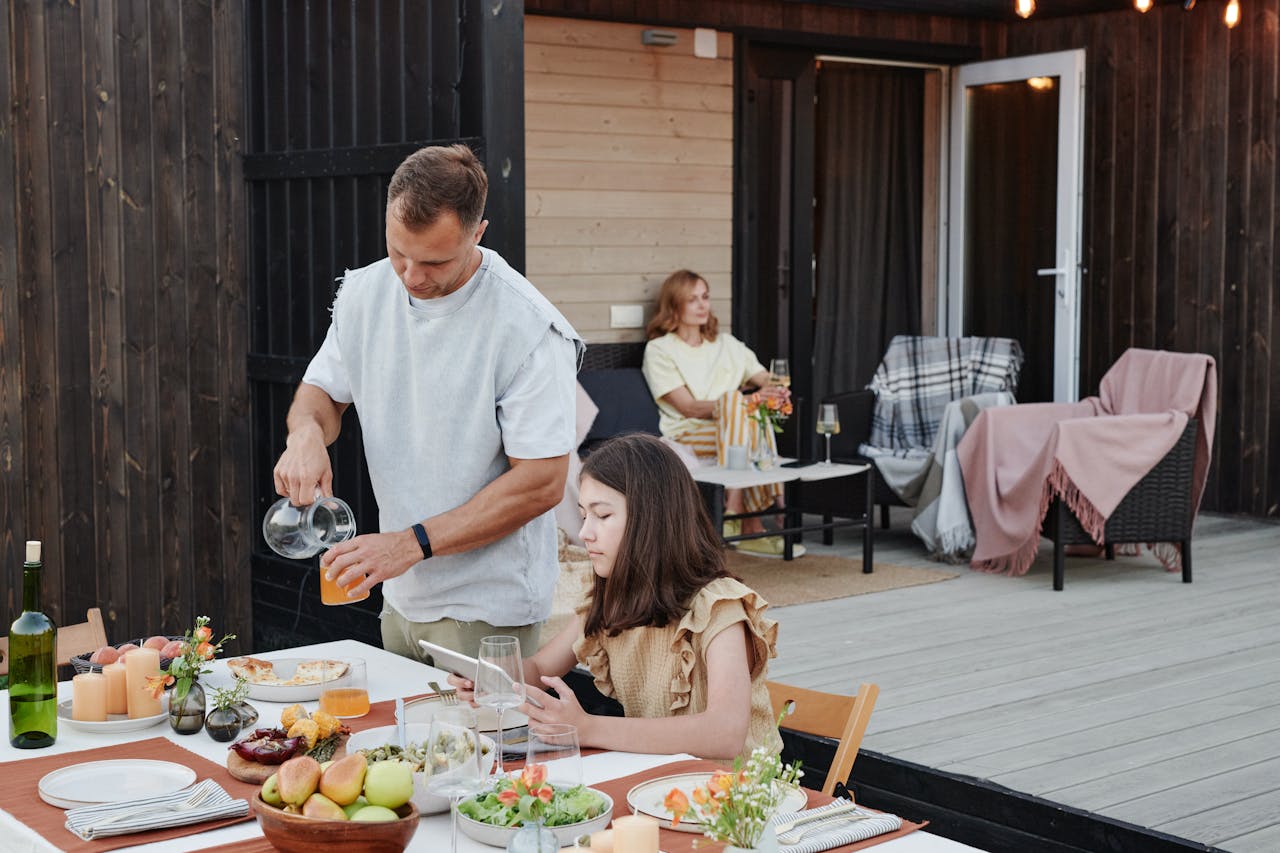
You can always tell when a backyard dining space is just “there” versus when it actually works. In one, people eat, compliment the food, and drift inside. In the other, plates sit empty for a while because no one wants to be the first to stand up. Someone refills glasses. Someone else leans back and keeps talking. Time stretches a little.
This difference usually has nothing to do with the recipe. It’s about comfort, layout, and the small choices that make the space feel settled. When the setup feels easy and grounded, meals naturally last longer; when it feels slightly off, even in subtle ways, people wrap up sooner than you expected.
Solid Ground
If the table wobbles or chairs sink slightly into gravel, guests notice. They may not say much, but they adjust. They sit carefully. They move around more than they need to. That tiny layer of discomfort shortens the mood.
A properly built patio changes everything. When the surface is level and firm, everything feels intentional. Given this, hardscaping services become a necessity for many homeowners. A well-prepared stone or paver base gives the dining area permanence. Skilled installers understand drainage patterns, soil behavior, and how different materials respond to weather. Those details may stay invisible once the table is set, but they’re what keep the space feeling dependable long after the first dinner party. Once the ground feels solid, people relax into their seats instead of checking their balance.
Soft Boundaries
A table dropped into the middle of an open yard can feel temporary, like it could be moved tomorrow. Adding edges. even subtle ones, make a difference. A low planter wall. A row of tall pots. A change in paver pattern around the dining area.
These quiet boundaries create a sense of “this is where we gather.” They don’t block views or close off the yard. They simply frame the space so it feels anchored. When the table feels like it belongs there, people treat it like a place to stay.
Clear Path
Traffic patterns matter more than most people think. If the dining table sits in the main walkway between the house and the rest of the yard, someone is always squeezing past. Plates shift. Conversations pause. The flow feels interrupted.
Move the table slightly off that main line of movement, and the entire mood changes. Guests aren’t bracing for someone to brush their chair. The space feels calmer. You can still move around easily, but the table itself becomes a pocket of stillness instead of a crossing point.
A Bit of Shelter
Wide-open yards are beautiful, but they don’t always feel cozy. If the table faces directly toward neighboring homes or a wide stretch of nothing, it can feel exposed. People sit differently in exposed spaces. They stay upright. They’re aware of their surroundings.
Add a little shelter and posture changes. A pergola overhead. Climbing plants along one side. Even tall greenery placed strategically can soften the openness. It doesn’t need to be dramatic. Just enough to create a sense of comfort. When people feel tucked in, they linger longer.
Easy Flow
Long meals depend on rhythm. Food arrives, plates get passed, drinks get refilled. If the host has to navigate obstacles every time they step away from the table, the rhythm gets clunky. Guests feel it.
Keeping the table within comfortable reach of the kitchen or a prep surface helps everything move naturally. A small side console for serving dishes can make a big difference. When the mechanics of the meal feel smooth, no one is thinking about logistics. They’re thinking about conversation.
Good View
Where the table faces matters more than most people realize. If everyone is staring at a fence panel or the back of a storage shed, the space feels flat. People look down at their plates instead of around at the yard.
Turn the table toward something living. A tree line. A layered garden bed. Even a simple stretch of lawn has depth. It gives the eye somewhere to wander while conversations pause naturally. Long meals usually include quiet moments between stories. A pleasant view fills those gaps without anyone reaching for their phone.
Warm Surfaces
Even on mild evenings, the ground cools faster than you expect. Once the temperature dips, people shift in their seats and start thinking about going inside.
Certain patio materials hold warmth longer after the sun goes down. Stone and concrete can carry just enough residual heat to take the edge off cooler air. This small difference keeps the space comfortable without anyone noticing why. When the ground still feels slightly warm underfoot, no one rushes dessert.
Soft Sound
Backyards aren’t always quiet. You might hear traffic in the distance, neighbors talking, or the hum of something mechanical. Those sounds pull attention away from the table.
Adding a gentle background sound can change the entire mood. A small water feature with a light trickle. Tall grasses that rustle in the breeze. Even the crackle of something subtle nearby. It doesn’t need to be loud. Just steady. This soft layer of sound smooths over outside noise and keeps conversation flowing naturally.
Texture Mix
Flat spaces feel unfinished. When everything around the table is the same material and color, the area lacks depth. It can look clean, but it doesn’t feel layered.
Mixing textures brings the space to life. Wood against stone. Cushioned fabric against rough pavers. Greenery brushing against structured surfaces. The variety gives the eye something to explore. Guests lean back and notice details. It makes the environment feel thoughtful without trying too hard.
Gentle Heat
There’s something about a nearby fire that slows people down. It doesn’t need to be a dramatic fire pit in the center of everything.
As plates empty, people naturally turn toward warmth. Conversations continue, chairs angle slightly, and no one looks at the time. The presence of heat keeps the evening open-ended. It invites a second round of drinks or another story without forcing it. The spaces that hold people longest don’t scream for attention. They don’t rely on elaborate décor or oversized features. They feel settled. Solid underfoot. Framed just enough. Easy to move through. Comfortable as the light changes. When the foundation is steady, the edges feel intentional, the traffic flows smoothly, and the atmosphere stays relaxed, meals stretch on their own.