




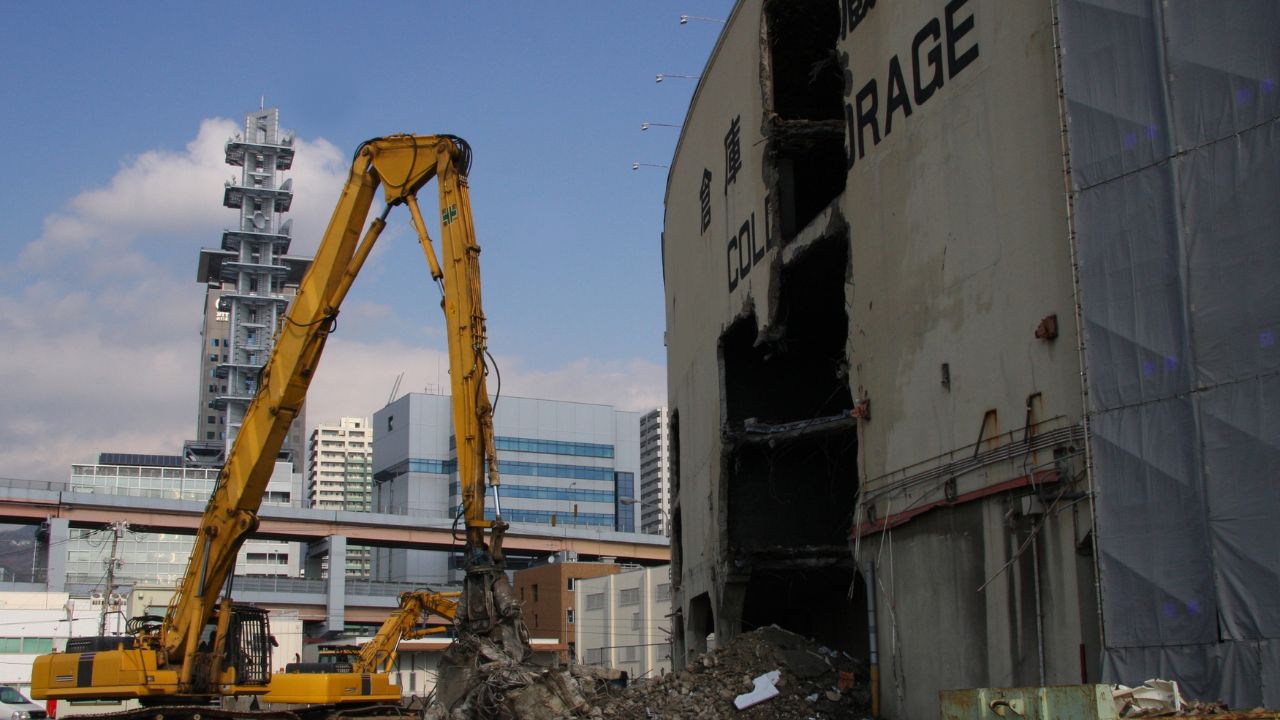
To most untrained eyes, a demolition site appears to be nothing short of chaos, and that’s because it is chaos. Buildings coming down from above, heavy machinery swinging through walls, debris falling at abnormal angles; it’s organized chaos but chaos all the same. But to a worker showing up to do the job with their tried and true hard hat, safety glasses and steel-toed boots, they think they’re covered. They’re not.
The reality is that what’s broken on demolition sites is not necessarily broken on new construction sites or in many industrial work settings. What construction personal protective equipment has been designed to protect against are predictable hazards: things that fall from above, things that cut into the ground, dust that may kick into the air. But demolition deconstructs any level of predictability to replace it with variables that safety manuals do not fully address.
Things Don’t Fall but Fly
Here’s what happens on a demolition site that happens nowhere else: materials are flying toward workers from all directions. A wrecking ball doesn’t just crush into something and send it straight down; it sends concrete and rebar hurling horizontally and at eye level toward people nearby. Walls don’t fall cleanly; they pivot; they twist; they swing. Beams in tension can snap and lash out before anyone has time to react.
Type 1 hard hats provide protection against impacts from above; that’s it. They’re tested for items that come crashing down onto the top of the hat’s crown – which makes sense for a construction site where the greatest hazard is a tool or material falling from the scaffolding above one’s head. However, when a steel beam swings sideways during a controlled demolition, a Type 1 hard hat provides next to no protection to the side of one’s head.
This is where many demolition subcontractors have begun requiring type 2 helmets that meet testing standards for both top impact and lateral impact protection. The testing discrepancy is vast, these hard hats must endure collisions from various angles, not merely from the top, and this substantiates what occurs when structures are taken down.
The Swing Zone
Excavators and demolition attachments create zones of danger that few people think about until it’s too late. A standard excavator bucket can have a 30-foot radius; add a concrete pulverizer or grappler, and that radius extends another 10 feet. A standard operator cannot see everything in that radius, especially when focusing on the structure they’re breaking down. But compounded with the inability to see is that the equipment is not just moving; it is actively engaging with unpredictability.
Workers become comfortable milling about while heavy equipment is in motion because it’s part of their job every day. But on a demolition site, that equipment isn’t merely moving; it’s working with compromised materials. A grapple attempts to pull apart a wall section; instead of releasing clean, the entire section tips and sends a wooden support beam cocking outward. That support beam does not care if you’ve worked in the industry for 30 years, and it certainly doesn’t care about your Type 1 hard hat.
But lateral impacts are not just created by the equipment itself; when equipment strikes a structure, materials vibrate and shift up to 50 feet away. Loose bricks from decades of weathering, exposed conduit due to unpinned wiring or detached fixtures of plumbing and electrical can all project 50 feet horizontally, but they will not fall straight down.
Confined Space: The Worst of Both Worlds
Interior demolition combines tight spaces with heavy impacts, and where standard PPE really falters. Tearing down walls inside an existing structure occurs in spaces where people barely have enough room to swing a sledgehammer, let alone limited space with overwhelming materials.
In these conditions, there are no areas for the debris to go but sideways into other spaces. A wall section can be torn down only to pivot toward someone else in the same room or adjacent room. The sounds and vibrations make it difficult to gauge when something is going to shift, and often there’s no clear exit.
Furthermore, people fail to realize that confined space demolition exposes workers to concealed utilities that become hazards once agitated. An electrical conduit that’s been dead for years may still be hot due to backfeeding.
A plumbing line under pressure can explode and send fixtures flying everywhere within a confined space. HVAC ductwork comes crashing down when it’s released by its supportive structure. All of these take place with impacts coming from lateral sides, not falling down.
Material Unpredictability
Different materials fail differently, and how they fail determines what’s hazardous for workers attempting appropriate disassembly. Concrete doesn’t crack and fall, a vessel built under tension explodes as soon as it’s relieved. Masonry walls often stand firm until they ultimately don’t; once they fail, they fall as single units instead of gradually breaking down piece by piece. Wood is even more challenging because it could be host to pests or rot – neither of which might be visible until it’s stressed.
Steel has its complications too, cut a steel beam halfway through, and it can still hold weight until someone knocks into it or vibration from another facet of demolition breaks it free. At this point, it’s catastrophic, and once someone steps away from it, sideways or down, it falls like an orphaned three-second rule sandwich.
Reinforced concrete is particularly nasty because rebar takes longer to break apart than concrete itself, as separate pieces whip around like cat-o-nine-tails once materials finally separate.
Workers using these materials need protection that acknowledges the reality of how buildings fail, the acknowledgment that impact could come from any angle, not just what’s appropriate for straight-down explosions.
Environmental Factors That Compound Everything
Weather makes demolition more dangerous, and in ways that are unrelated to other construction efforts. Rain does not merely create slippery surfaces, it adds weight to materials through similar penetration over time once already compromised. A brick wall may stand tall for hours given dry conditions, but once rain hits, it creates matrix patterns that shove structures aside in ways they inevitably fail.
Wind creates lateral force across a partially demolished wall, what once stood firmly now becomes an effective sail.
Cold makes materials more brittle, the inevitable snapping rather than bending creates sharper edges and heavier failures. Heat softens asphalt and tar, which suddenly releases materials instead of gradually loosening them as planned.
None of these weather-related failures are nice nor direct, they create lateral movement and payload flying sideways.
What This Means for Demolition Crews
The bottom line is that standard construction PPE was built for certain safety factors required by another safety protocol. Demolition work requires awareness of impacts coming from all angles, and the predictability of reduction requires better protection than what a standard hard hat can provide.
The differential cost is negligible compared to medical bills incurred from lateral impact versus simple lost time used through inadequately assessed PPE protocols.
Not all demolition sites should assess potential hazards based on new construction efforts; workers and supervisors must note which vulnerabilities exist on site instead. That means determining how different materials fail (or not), how swing zones denote practical safety environments and why confined spaces trump the risk-reward approach for PPE adequate solely from lateral sides instead of deemed optional.